The 2025 sales exclude medical robots. The total of 249,568 is the sum of the six categories in the official IFR chart ↗, including 7,887 units in other applications. Annual sales and the RaaS fleet measure different things.
IFR combines supplier surveys and public sources without extrapolating to the whole industry. Samples vary between editions: growth rates are those published in each report, not a series built by combining their totals.
IFR’s statistical definition of RaaS includes rental and leasing when the hardware remains with the supplier. This category is broader than our approach of managing an entire task.
We start with service businesses and facility managers whose repetitive tasks take time and involve moving around a site. Depending on the application, the service could also be available to individuals.
Pay for the task, not the robot
The model we are developing is built around one-off or recurring tasks. BlueMonkey would provide the robots and handle operation, maintenance and support, reducing the customer’s initial investment.
In R&D: technical and economic feasibility is assessed for each application.
Examples of tasks we can explore
Cleaning and maintenanceSurfaces, facilities and outdoor spaces.
The surface, work frequency and tools required determine which system to investigate.
Inspection and monitoringMonitoring spaces, inspecting facilities and tracking their condition.
The environment and what needs to be detected guide sensor choice and the level of autonomy.
Mapping and observationSurveying areas, creating maps and observing the environment.
Area size and required accuracy help determine whether one or several units make sense.
How we develop it
From a task to a cooperative system.
We design mechanics, electronics and software as a reusable foundation. We adapt sensors and tools to each task and investigate how several robots can tackle it together.
We start with the expected result, the work area and its obstacles. This defines what the robot must do and the supervision it needs.
↳ Autonomy is matched to the task and its operating conditions.
Share the workload
Several units. Complementary work.
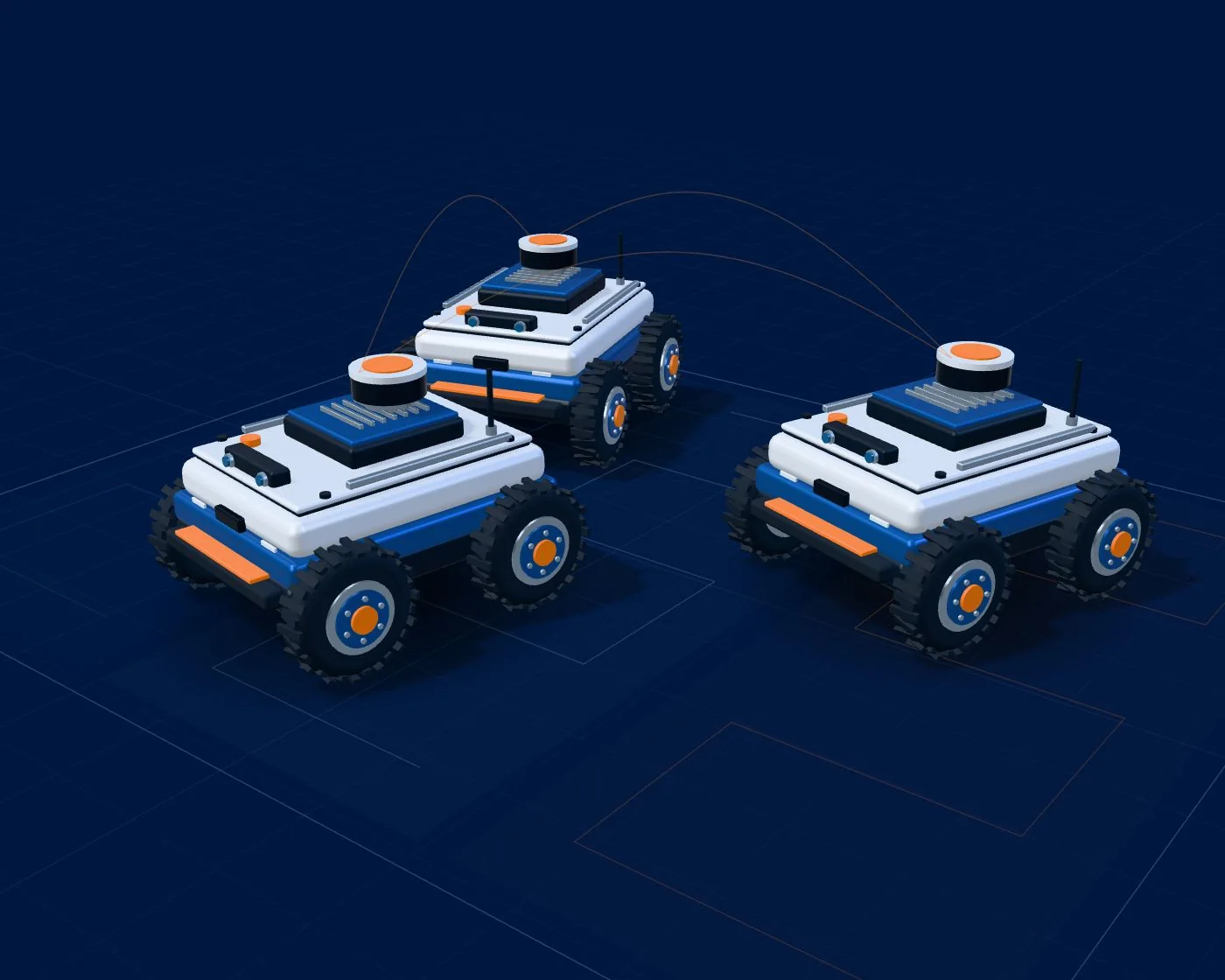
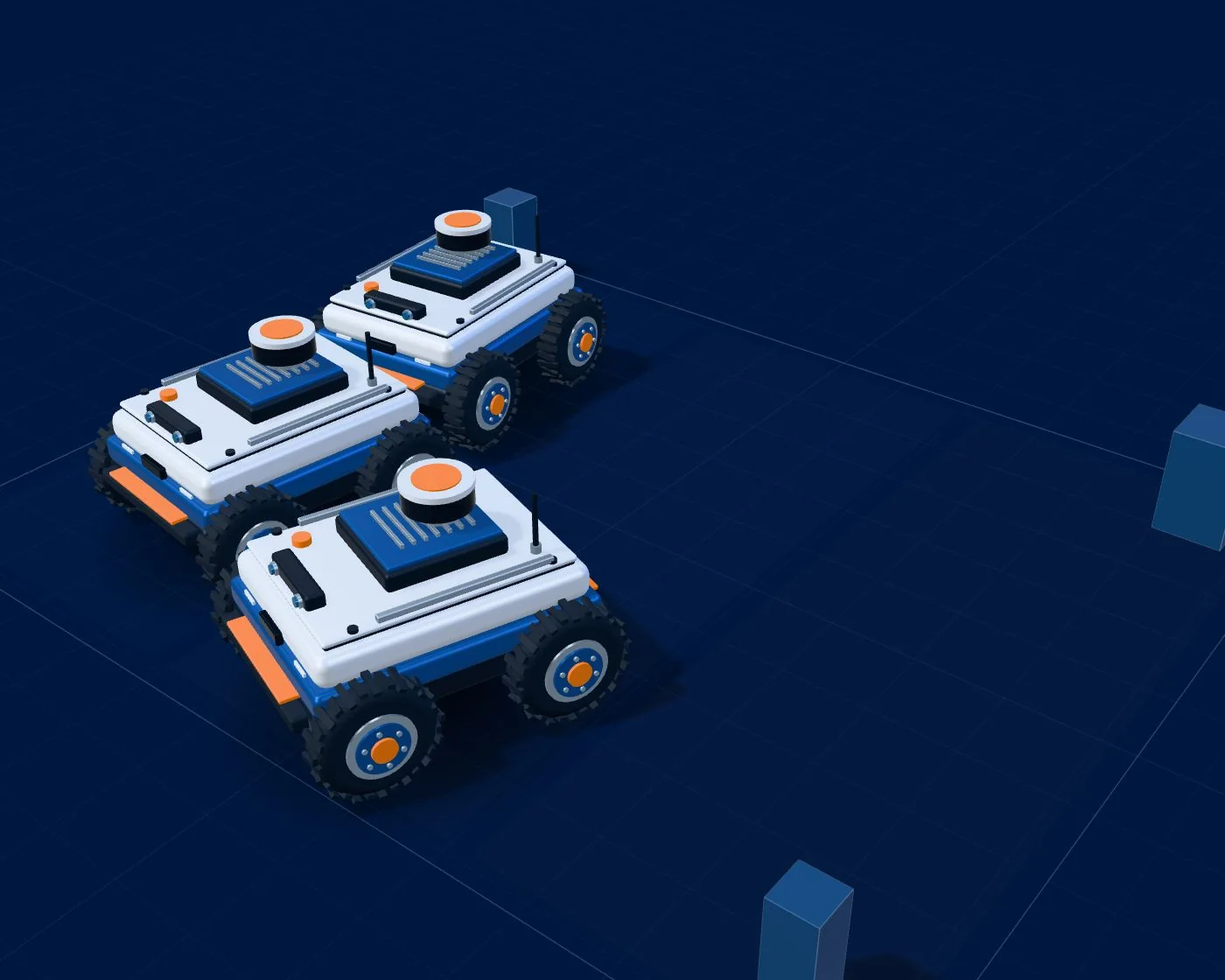
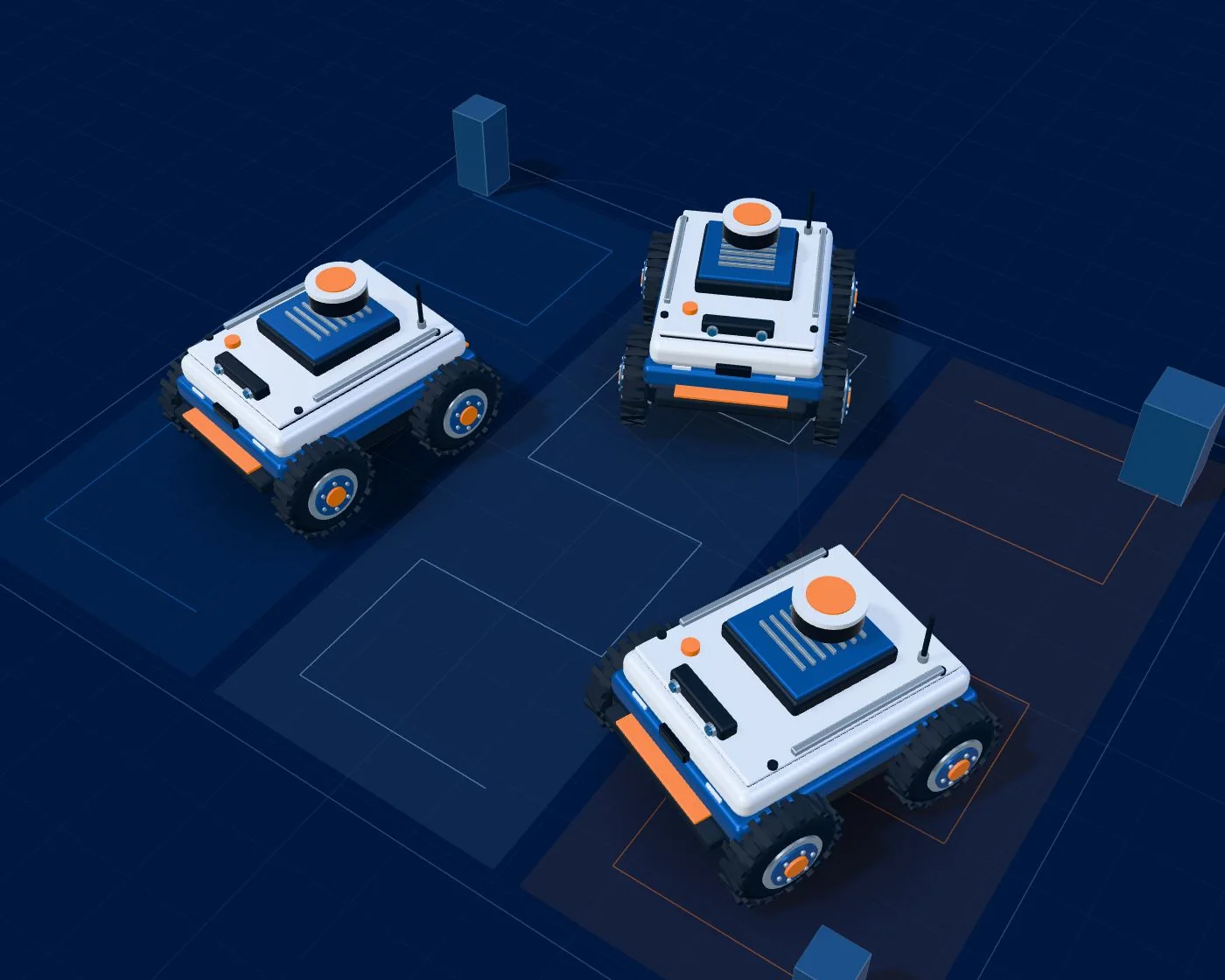
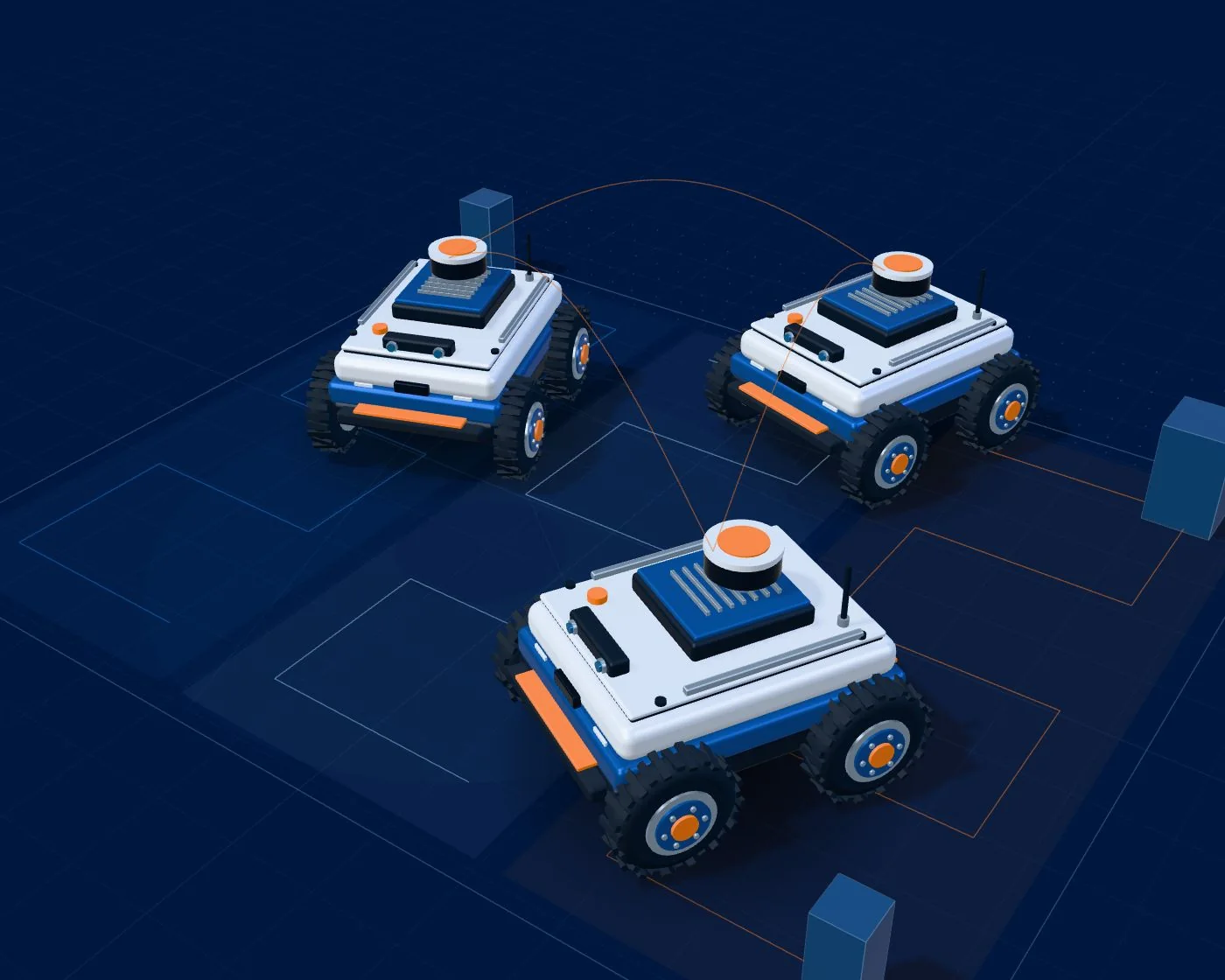
One robot can handle an area or function while another works alongside it. We study when this division helps cover more space or combine tools.
↳ A swarm makes sense when cooperation brings a benefit.
Share perception
Each robot observes. The group shares.
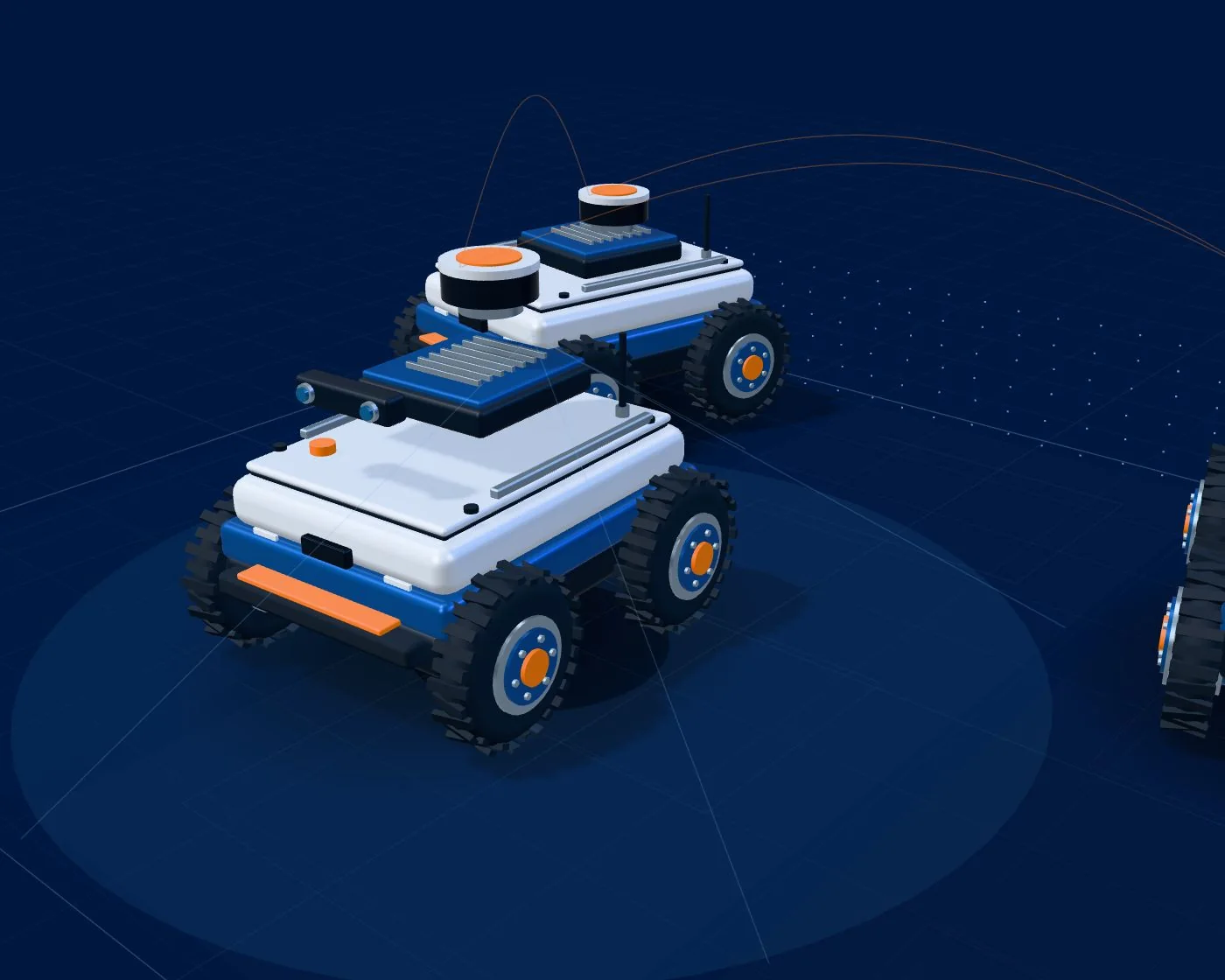
Sensors capture the surroundings. We investigate how AI can interpret these observations and support the robot’s decisions, and how useful information can be shared between units.
↳ We also use AI to support design, programming and analysis.
Coordinate and verify
Act as part of a group.
Coordinating routes and actions should prevent interference and move the group towards a shared goal. We weigh the benefits against the cost of communicating and processing information.
↳ Distributed coordination is a long-term research direction.
Applied research
Project definition · October 2026
Lucy. Our starting point.
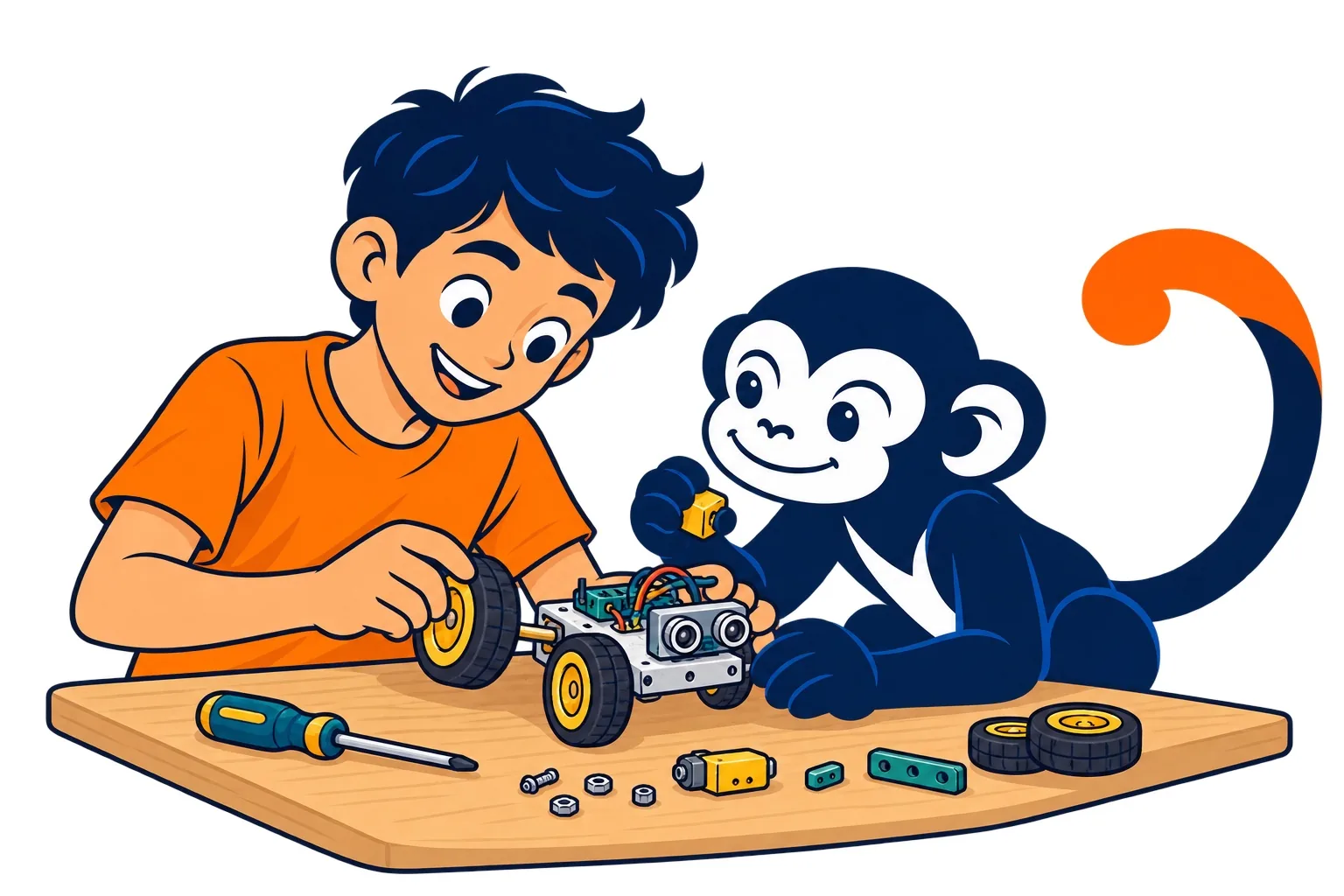
Our first mobile robot. We are building it from scratch through cycles of design, assembly and testing.
The name
Like the famous Australopithecus afarensis fossil, it represents a first step: ours in the project’s development.
Overall objective
Validate a reliable, reproducible robotic foundation that we can build on in future developments.
We assess performance, repeatability, maintenance and cost. Documented designs and tests guide each iteration.
The team
Engineering from Málaga.
We are Darío and Jeanpaulo, with academic backgrounds in Electronic, Robotics and Mechatronics Engineering and Artificial Intelligence. We design, program and build the prototypes ourselves.
Experience in data, AI and automation; radio frequency, telecommunications and certification.
We are looking for real needs, technical partners and funding to advance our R&D. We can develop a solution with your business and turn what we learn into technology that benefits both sides.
Choose how to get in touch
Tell us about the task, the environment and the result you need. We will assess the fit and a possible joint trial.